January 29, 2026
, in technology
Should Kids Be Kept Off Social Media?
Is social media to blame for the worsening mental health of young people? Australia thinks so, recently enacting a ban restricting children under sixteen from accessing social media. Eidosmedia explores the reasons behind this controversial move.
Australia Bans Social Media for Under-16s Amid Mental Health Crisis
-
UPDATE: In France a bill to ban social media use for under-15s has been overwhelmingly approved by Parliament's lower house before making its way to the Senate.
Over 60% of the global population now uses social media (Global Statistics) — a figure that represents billions of people spending hours a day engaging with multiple platforms. For some of those users, social media is just another source of content. But for others, especially young users, it’s the center of their lives.
Unfortunately, increased social media usage in young people has coincided with an increase in mental health issues, leading child advocates to question the safety of this now ubiquitous form of entertainment. Amid these mounting calls for reform, some, like the Australian government, are beginning to take action.
The mounting case against social media
Since TikTok burst on the scene in 2016, social media platforms have increasingly favored hyper short-form content designed to capture and hold short attention spans for long stretches of time. Nearly a decade later, short-form video content has turned social media addiction into an epidemic.
In 2024, the American Psychological Association reported that the average U.S. teen spent a staggering 4.8 hours a day on social media. Even more alarming, of the adolescents who reported using social media five or more hours a day, 41% described their mental health as “poor or very poor, compared with 23% of those with the lowest use.”
Books like psychologist Jonathan Haidt’s The Anxious Generation have zeroed in on this correlation between increased social media usage and the declining mental health of young people. In an interview with The Hub, Haidt describes phones as 'experience blockers.' “This explains why, as soon as Gen Z got hyper-connected—around 2012, with smartphones and Instagram—that’s exactly when they began getting more lonely and depressed.” Haidt goes on to identify four “foundational harms” associated with increased social media use in young people — diminished social development, fewer hours of sleep, attention fragmentation, and phone addiction — and proposes several 'foundational reforms' ranging from phone-free schools to restricting social media usage to a certain age. It’s understandable if these suggestions seem idealistic, given how difficult it is to limit the activity of young people — but in Australia, the government is willing to try.
Australia moves to ban social media for children under 16
According to the BBC, the Australian government has moved to ban social media for children under sixteen following a 2025 study that found “96% of children aged 10-15 used social media, and that seven out of 10 of them had been exposed to harmful content.”
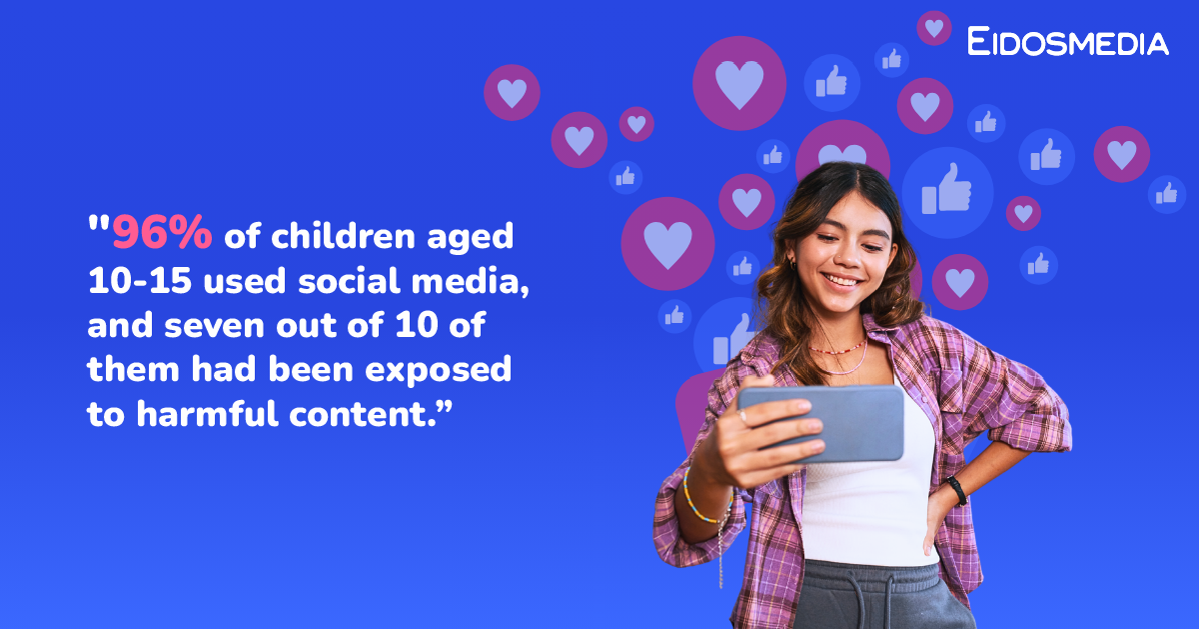
The harmful content in question ran the gamut from “misogynistic and violent material” to “content promoting eating disorders and suicide.” If this wasn’t serious enough, “One in seven also reported experiencing grooming-type behaviour from adults or older children, and more than half said they had been the victim of cyber-bullying.”
It’s important to note that Australia is not implementing a blanket ban. The government has established three criteria for determining the harmfulness of a platform:
- whether the platform's sole or "significant purpose" is to enable online social interaction between two or more users;
- whether it allows users to interact with some or all other users; and
- whether it allows users to post material
Only ten platforms have been determined to meet this criteria — “Facebook, Instagram, Snapchat, Threads, TikTok, X, YouTube, Reddit and streaming platforms Kick and Twitch” — while platforms like “YouTube Kids, Google Classroom and WhatsApp” will not be banned because they don’t meet the criteria.
The ban is also careful not to pin blame or responsibility on the users. “Children and parents will not be punished for infringing the ban,” the BBC clarifies. Instead, the Australian government has put the onus squarely on the social media platforms, threatening fines of “up to A$49.5m (US$32m, £25m) for serious or repeated breaches.” To avoid these steep penalties, “firms must take ‘reasonable steps’ to keep kids off their platforms, and should use multiple age assurance technologies” to do so. Age-assurance doesn’t mean adding a self-verifiable age requirement to sign up for an account, either; it requires objective proof of age, such as a government ID.
How is Australia’s social media ban being received?
Unsurprisingly, teens and social media platforms alike voiced their displeasure with Australia’s social media ban. “Firms argued it would be difficult to implement, easy to circumvent and time consuming for users, and would pose risks to their privacy,” writes the BBC. “Companies also suggested it might drive children into dark corners of the internet and deprive young people of social contact.”
Despite the uproar, Meta began removing accounts of users under sixteen as of December 4, 2025. Snapchat also seems to have implemented age restrictions, instructing eligible users over sixteen to “use bank accounts, photo ID or selfies for verification.”
But while social platforms are, at least superficially, signaling their compliance, a number of complaints have been lobbed against the ban. According to the BBC, some feel the scope is too limited since “Dating websites are excluded along with gaming platforms, as are AI chatbots…” while others feel “educating children about how to navigate social media would be more effective.” Concerns have also been raised by the “large-scale collection and storage of data required to verify users' ages,” especially since Australia has suffered “a series of high-profile data breaches where sensitive personal information was stolen and published or sold.”
But are social media really to blame?
Additionally, a small but vocal faction has questioned the legitimacy of the claim that social media is worsening adolescent mental health. Haidt, in particular, has been criticized for confusing correlation with causation since there is scant scientific evidence to support his argument. Reviewing The Anxious Generation for Nature, psychologist Candice Odgers opined that, “Hundreds of researchers, myself included, have searched for the kind of large effects suggested by Haidt. Our efforts have produced a mix of no, small and mixed associations. Most data are correlative. When associations over time are found, they suggest not that social-media use predicts or causes depression, but that young people who already have mental-health problems use such platforms more often or in different ways from their healthy peers.”
Odgers agrees that “considerable reforms to these platforms are required, given how much time young people spend on them,” but warns that “age-based restrictions and bans on mobile devices, are unlikely to be effective in practice — or worse, could backfire given what we know about adolescent behaviour.”
When asked by Holden Thorp whether there was “no harm in implementing Haidt’s recommendations,” Odgers disagreed “strongly” for two reasons:
“The first is ‘the opportunity cost for sending everyone out chasing the data to back up these stories, instead of keeping their focus on the main issues that are threatening the mental health of young people and figuring out how to better support them in the online spaces where they spend most of their time.’”
The second is, “‘...it sends a message that this is a shameful activity. When adults think about social media, they think about the awful way we behave on Twitter, not the many positive things that young people do.’”
A global test case and a watching world
As countries around the globe consider taking similar action against social media, Australia’s social media ban is being watched closely. Only time will tell if the restrictions work and Australia becomes an example the rest of the world follows, or if concerns over compliance, scope, and data security are founded and this becomes a cautionary tale.
But, as Odgers reminds us, the mental health crisis in younger populations is a complex and nuanced situation unlikely to be solved by social media restriction alone. Warning against distractions, Odgers calls for “...the best of what science and evidence-based solutions can offer” instead of “telling stories that are unsupported by research and that do little to support young people who need, and deserve, more.”