December 02, 2025
, in technology
Neon: the ‘pure play’ in digital news technology
For decades, news organizations have relied on compromise and improvised workflows. Eidosmedia now offers a dedicated platform for creating and delivering digital news.
Eidosmedia Neon: the digital-native platform for modern news publishing | Eidosmedia
More than three decades after news organizations first published on the World Wide Web, it's remarkable that so few technology solutions exist specifically for digital news operations. Publishers have improvised with generic content management systems, adapted blogging platforms, or attempted to build their own solutions—often with mixed results.
This gap in the market isn't accidental. It reflects the genuine difficulty of creating technology that can keep pace with the speed of digital news while adapting to constantly evolving platforms, formats, and audience expectations.
The convergence challenge - solved
Over twenty years ago, the industry faced a similar problem: how to bridge the fundamental divide between print editorial systems and digital publishing. Most attempts to graft a web CMS onto an existing print-media system were unsuccessful due to the profound differences between the technologies underlying print editorial systems and the digital protocols used by the web.
At Eidosmedia we solved that puzzle by rethinking the architecture from the ground up. Instead of grafting web capabilities onto print systems, we built an integrated platform using web-standard technologies—XML, CSS, and open protocols—to drive all channels, including print. This approach gave publishers genuine cross-media workflows without compromise for the first time.
The digital-native gap
But what about publishers who operate purely in digital? Publishers opting for the ‘pure play’ – as online-only operations were termed at the time – were forced to fall back on a standard web CMS or a modified blogging platform. These generic systems inevitably lacked the kind of functionalities needed to coordinate fast-moving news operations – sophisticated workflow management, collaborative planning tools, version control, and the ability to coordinate across multiple properties and regions.
The DIY temptation
As the number of online-only news providers grew, it was understandable that some of them would be tempted to create their own in-house digital platforms to deliver the kind of news-specific functionalities lacking in the generic solutions.
Several digital news-media organizations in the USA and in Europe invested heavily in custom platforms, only to abandon them after a few years. The maintenance burden and the challenge of keeping pace with technological change proved unsustainable. The latest news organization to discontinue its custom CMS was Vox Media, citing the difficulty of maintaining the platform and supporting other users.
What digital news actually requires
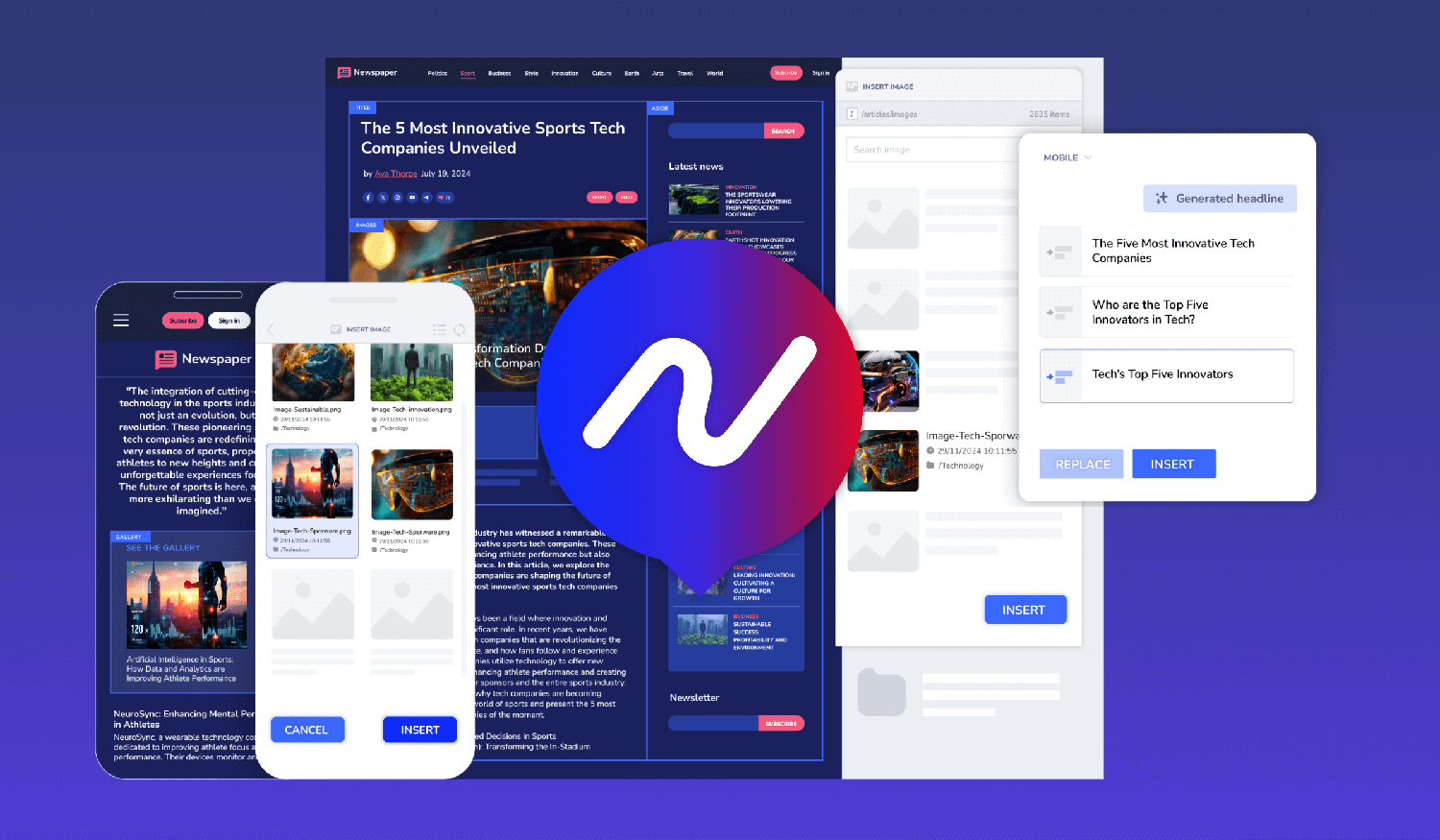
This brings us to Neon—a platform designed specifically for how digital news organizations actually work today.
The development brief was straightforward but demanding: create a system that leverages current digital technologies to maximize the reach and impact of quality journalism, while remaining flexible enough to adapt as the landscape continues to evolve.
Three design principles shaped the platform:
- Support for multi-title, multi-regional portfolios
Early digital platforms were built for single websites. Today's news organizations often manage multiple properties—different titles, regional editions, specialized verticals—each with its own audience and brand identity. Neon handles these portfolios through a unified hub, enabling content sharing and operational efficiency, while preserving each property's distinct character.
- Strategic AI integration
Neon integrates AI as a productivity multiplier – both through inbuilt AI routines and the ability to harness external models. Using the unique ProActions framework, newsrooms can create custom AI tools that eliminate routine tasks—generating SEO metadata, creating social variants, identifying related archive content or managing site updates automatically.
One recent implementation generates in a few seconds a complete publication package from a finished story: optimized headlines, summaries, key points, social posts, and even podcast scripts. Tasks that once consumed thirty minutes of editorial time now happen instantly, freeing journalists to focus on reporting and writing.
The system remains agnostic about AI providers. Newsrooms can integrate any of more than forty different engines, including enterprise-secure options like Langdock, choosing the tools that best fit their needs and policies.
- An open platform to build on
Neon provides comprehensive publishing functionality out of the box while remaining open to extensive integration.
APIs facilitate connections with with a wealth of third-party apps from newsletters and planning systems, to analytics and CRM tools.
Webhooks enable integration with internal services. Neon’s headless architecture supports delivery to any digital channel or format.
Cloud containerized architecture scales smoothly to cope with both traffic levels and expanded data volumes facilitated by native support for database sharding.
Closing the circle
While dedicated to digital-only publishing, Neon offers exceptional synergies to publishers managing both print and digital operations. Fully compatible with existing Eidosmedia print platforms with AI-driven page automation, this combination enables newsrooms to operate mixed portfolios with unprecedented efficiency and productivity.
Over twenty years ago, Eidosmedia solved the convergence problem for print publishers moving into digital. Neon addresses the parallel challenge for digital-native operations: providing the specialized tools that news organizations need to address the continuing challenges of audience evolution and technical change.
What’s next?
Looking ahead, Neon is continuously evolving, exploring new ways to help newsrooms deliver more personalized audience experiences while advancing its AI capabilities.
Our vision includes AI MCP, which powers context-aware content generation to help newsrooms deliver more relevant stories, as well as intelligent AI agents designed to collaborate seamlessly with editors, helping teams work smarter and faster than ever.
Click here to find out more about Neon features and specifications.
Neon FAQ
What kinds of news operations can use Neon?
Neon optimizes a range of digital news operations from a single site managed by a centralized newsroom to multiple titles managed from multiple locations worldwide.
How does Neon support news creation?
By automating routine tasks, allowing authors to concentrate on
the creation of a complelling narrative for their audience.
What kind of tasks does Neon automate?
Preformatted templates, AI-generated headlines, summaries and
rephrasing , automatic proofreading, multichannel formatting and
scheduling, advanced SEO automation. Automatic management of news
pages and sections.
What kind of AI does Neon use?
Neon is designed to be "AI-agnostic," allowing users to
choose their preferred large language models (LLMs), including
locally hosted models for confidential content.
What kind of news formats does Neon deliver?
Neon can automatically tailor channel-neutral content in
any digital format from web pages to mobile apps, audio, video and
social media. It also applies advanced SEO principles.
Can Neon cover live events?
Yes, Neon includes Live Blog functionality that allows
authors to cover sports events or breaking news in real-time,
using a straightforward editor with rich text and images that
automatically update online content. The system also includes
moderation tools for managing multiple contributors.
About Eidosmedia
Eidosmedia is a global supplier of advanced content-management and digital publishing systems.
Its products are used by large news-media groups for print and digital publishing.
Customers include business dailies The Financial Times and The Wall Street Journal , as well as generalist news publications like The Times of London, The Washington Post and Le Figaro .