June 22, 2026
, in technology
Can France break with Windows?
France is making a bold move to replace Windows with Linux across the whole national government. Find out why and what this could mean for Microsoft.

Why France Is Replacing Windows with Linux Across Government
KEY POINTS
- France plans to move 2.5 million public sector users from Windows to Linux. The goal is to reduce reliance on U.S. technology providers.
- Digital sovereignty is driving the transition. French officials want greater control over data, infrastructure, and software decisions.
- Success will depend on long-term planning. Past migrations in France and Germany show that gradual rollouts work best.
The French government’s decision to abandon Windows and move its two and half million users to a Linux-based OS is an unprecedented move for a national body.
On April 10, 2026, the French government announced that it would migrate 2.5 million civil servant users from Microsoft Windows to Linux. The move has been described by Tech Insider as “one of the most significant rejections of U.S. tech dominance by a major Western democracy.” The French government’s Digital Directorate requires every ministry and public operator to submit detailed implementation plans by autumn 2026.
What’s behind France’s declaration of independence from Office and the rest of Windows? And can they really pull off this bold maneuver at such a scale? Let’s find out.
Why France is moving away from Microsoft
Every release of Microsoft’s OS attracts criticism. “Even Windows 10, widely considered the most popular version ever, had its share of skeptics in the early days,” commented ZDnet.
But the latest iteration of Windows seems to have particularly irritated large sections of the user base. From annoying user interface issues to demanding hardware requirements, Windows 11 has garnered many complaints. PCMag was inspired to publish an article called “The 10 Worst Things About Windows 11.”
Even Microsoft is taking notice. ZDNet reported that Windows chief Pavan Davuluri told The Verge, “The feedback we're receiving from our community of passionate customers and Windows Insiders has been clear. We need to improve Windows in ways that are meaningful for people. ... This year you will see us focus on addressing pain points we hear consistently from customers: improving system performance, reliability, and the overall experience of Windows.”
A question of sovereignty?
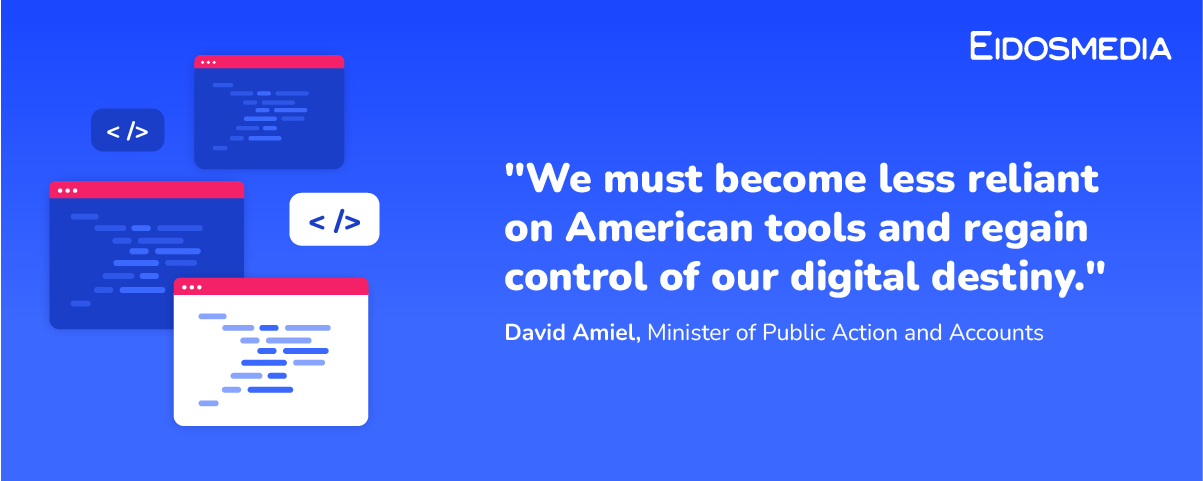
Windows 11 may be widely reviled among many users, but the French government isn’t preparing to switch over its millions of users just because of a glitchy new update. No, this is the latest symptom of a growing distrust of U.S.-based software companies. As TechRadar reported, David Amiel, Minister of Public Action and Accounts, explained (translated): "We must become less reliant on American tools and regain control of our digital destiny. We can no longer accept that our data, our infrastructure, and our strategic decisions depend on solutions whose rules, pricing, evolution, and risks we do not control.”
As ZDNet reports, this is just the latest sign of growing discontent and a move toward digital sovereignty: In 2025, Austria's military replaced Microsoft Office with the open-source LibreOffice, as did the German state of Schleswig-Holstein. However, France’s move to Linux seems to be a first.
Will it work?
Migrating millions of workers to a new operating system is no small task, especially when dealing with an open-source system like Linux. No specific Linux distribution system has been named, but some apps are already in place.
The Next Web (TNW) writes, “The software replacement strategy for the most common desktop tasks is already in place in the form of La Suite Numérique, a stack of sovereign productivity tools developed and maintained by digital directorate DINUM. It includes Tchap, an end-to-end encrypted messaging application already deployed to more than 600,000 civil servants, Visio for video conferencing, a sovereign webmail service, file storage, and collaborative document editing.” In other words, many of the most common business applications are already in place.
“This time is different”
However, other organizations have vowed to dump Microsoft and failed, and some skeptics may expect the French to reverse course. But TNW thinks there is more reason to believe they may be successful. What may be key to their success is that France has been quietly preparing for this moment for more than two decades.
“France has a reason to believe this time is different, and the reason is the Gendarmerie Nationale,” reports TNW. “Beginning in 2004 with a phased adoption of OpenOffice, Firefox, and Thunderbird, the Gendarmerie progressively built the internal competencies and governance structures required for a full operating system switch. In 2008 it launched GendBuntu, its customized Ubuntu-based deployment.”
With GendBuntu on more than 103,000 workstations, the project has saved roughly €2 million per year. Another successful precedent is the German state of Schleswig-Holstein’s move away from Microsoft which has saved a reported €15 million in licensing costs in 2026, with only 80% of its systems migrated. “The lesson both cases illustrate is the same: phased migration with coherent governance, strong internal support functions, and sustained political will consistently outperforms big-bang approaches that attempt to switch everything at once,” writes TNW.
What does it all mean for Windows?
At this moment, Microsoft has to be thinking about more than bug fixes and user interface issues with Windows 11. As digital sovereignty becomes a bigger issue for government and large corporations, and the reputation of American tech companies is called into question, things could get much worse, even for a company whose dominance has gone virtually unchecked in office settings for decades.
As TechRadar put it, “It's crystal clear that there's been a growing lack of faith in Microsoft and the direction it has taken with Windows 11 since the launch of its newest operating system.” But no tech article would be complete without a mention of AI, and in this case, Windows users have been pushing back on AI features no one asked for, calling on Microsoft to simply fix the problems with its OS instead. And where AI is involved, so are concerns about data privacy—adding further fuel to the embers of the digital sovereignty fires.
A stormy political climate
Take another step back to consider the European Union’s changed relationship with the United States and President Donald Trump’s tariffs, and you have the perfect catalyst for lasting change. TNW reported that these factors “reignited Europe’s push for cloud sovereignty from April 2025 onward, with OVHcloud and Scaleway reporting record client growth as European institutions began actively seeking to reduce their exposure to American vendors. In November 2025, France and Germany convened a joint summit on European digital sovereignty, establishing a task force to report in 2026.” France’s prominent position in the EU makes it likely to be a leader in this movement, showing that it's not just possible to ditch the Windows environment - it’s actually good for the bottom line.
Damage limitation
The question is not if other countries will follow suit, but how many and how quickly. While there is plenty Microsoft can do to address user complaints and simply build a better product instead of focusing on AI tricks, addressing concerns over digital sovereignty is another matter entirely. If it can’t reverse the damage done by U.S. foreign policy, its best bet may be to build a better product and address privacy concerns to at least make the need to migrate less urgent.
FAQ: Can France Break with Windows?
1. What did France announce regarding its government IT infrastructure?
On April 10, 2026, the French government announced it would migrate 2.5 million civil servants from Microsoft Windows to a Linux-based operating system. Every ministry and public operator must submit detailed implementation plans by autumn 2026.
2. Why is France moving away from Microsoft Windows?
France's decision stems primarily from a desire for digital sovereignty — reducing reliance on U.S.-based software companies. Minister David Amiel stated that France must "regain control of its digital destiny" and stop depending on systems whose rules, pricing, and risks it cannot control.
3. Is Windows 11 also a factor in France's decision?
Yes, Windows 11 has been widely criticized for its demanding hardware requirements, interface issues, and unwanted AI features. While not the main driver, frustration with the OS added momentum to France's push to find an alternative.
4. Is France the first country to make such a move?
France appears to be the first country to migrate its entire government infrastructure to Linux at this scale. Earlier moves include Austria's military switching to LibreOffice in 2025, and the German state of Schleswig-Holstein abandoning Microsoft Office.
5. What tools are already available to replace Microsoft's software?
The set of productivity tools called La Suite Numérique includes Tchap (an encrypted messaging app already used by over 600,000 civil servants), Visio for video conferencing, a sovereign webmail service, file storage, and collaborative document editing tools.
6. Has France attempted or prepared for this kind of transition before?
Yes. France has been quietly preparing for over two decades. The Gendarmerie Nationale began adopting open-source software in 2004 and launched GendBuntu, a custom Ubuntu deployment, in 2008. It now runs on more than 103,000 workstations.
7. Has the Gendarmerie's Linux migration proven cost-effective?
Absolutely. The Gendarmerie's GendBuntu deployment has saved approximately €2 million per year. Similarly, Germany's Schleswig-Holstein reported €15 million in licensing savings in 2026, with only 80% of its systems migrated.
8. What is the key to a successful large-scale migration like this?
According to analysts, the key is a phased approach with strong governance, internal support, and sustained political will. Big-bang migrations that switch everything at once tend to fail, while gradual rollouts with clear planning succeed.
9. How does the broader EU-U.S. political context factor into this decision?
Tensions over U.S. tariffs and foreign policy under President Trump have accelerated Europe's push for cloud and digital sovereignty. France and Germany held a joint summit in November 2025, establishing a task force on European digital independence.
10. What does this mean for Microsoft's future in government markets?
It's a serious warning sign. As digital sovereignty concerns grow and trust in U.S. tech companies erodes, Microsoft faces the risk of losing government contracts across Europe. The company must address not only product quality and privacy issues but also geopolitical concerns it has little control over.
About Eidosmedia
Eidosmedia is a global supplier of advanced content-management and digital publishing systems.
Its products are used by large news-media groups for print and digital publishing and by financial service firms for the creation and dissemination of research and guidance.
Customers include business dailies The Financial Times and The Wall Street Journal , as well as generalist news publications like The Times of London, The Boston Globe and Le Figaro .